14th Feb 2026
Australian Guzheng Sales: Exploring a New Local Market
In the multicultural land of Australia, traditional Chinese art is gradually entering the mainstream. The guzheng, an oriental instrument that carries the melodies of a thousand years, is no longer just a nostalgic symbol in Chinese households but is increasingly finding its way into the lives of local music enthusiasts, becoming a captivating note in cross-cultural exchanges.
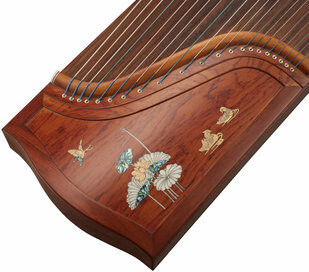
In the past, the sales of guzhengs mainly relied on the Chinese community, with immigrant families purchasing them for their children to learn or as a cultural connection driven by nostalgia. However, as people's interest in world music grows, more and more non-Chinese Australians are being drawn to the guzheng: its elegant curved shape, ethereal and melodious tones, and the profound philosophy and poetry behind it all offer a refreshing experience. This interest is no longer mere curiosity but a sincere appreciation of the culture. Seizing this trend, the market for guzhengs can be redefined.
The real breakthrough lies in not only allowing locals to hear the guzheng but also to touch and even learn Many Australians have been exposed to Western music systems since childhood and are very familiar with instruments like the piano and guitar, but they also yearn to explore different sounds. We have found that many local music lovers are willing to try the guzheng, especially those who enjoy improvisation, world music, or film scores. The key is to lower the entry barrier. The answer is experience.
By collaborating with art galleries, libraries, and cultural festivals to hold small concerts or offering free trial workshops, people can personally pluck the strings and feel the oriental charm flowing from their fingertips. An immersive experience is often more persuasive than ten advertisements. When interest turns into a desire to learn, the need to purchase a guzheng naturally follows.
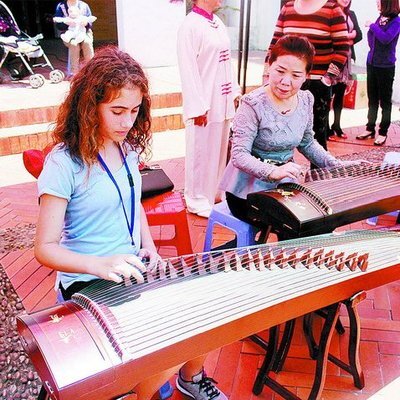
In the field of education, the potential is even greater. Universities such as the Sydney Conservatorium of Music and the Queensland Conservatorium have recently introduced Chinese folk music courses, and some have even established Asian instrument ensembles. As one of the most representative Chinese plucked instruments, the guzheng is gradually being integrated into the teaching system. These institutions have high requirements for instrument quality, demanding stable tuning, durability, and professional service support. This presents both a challenge and an opportunity for guzheng suppliers to build brand credibility.
Of course, to gain a foothold in Australia, the product itself must be adapted to local conditions. The climate in Australia is dry and variable, especially in the inland areas, making wooden instruments prone to cracking and warping. Therefore, optimizing the manufacturing process to enhance moisture resistance and crack prevention has become a basic requirement. Additionally, beginners often prefer intuitive operation. Providing English content in user manuals, labels, and instructional videos can significantly improve the user experience. Some thoughtful designs can also help users get started more quickly.
The significance of the guzheng in Australia goes beyond that of a mere commodity. It is a cultural ambassador and an emotional bridge connecting different communities. When we no longer view it as "exclusive to overseas Chinese" but truly understand the needs, design services, and tell stories from a local perspective, its vitality will truly be unleashed.