8th Jan 2026
For Guzheng Beginners, Avoid These Three Common Mistakes!
The guzheng, as a traditional Chinese musical instrument, carries the elegance of a thousand years and has now spread widely around the world. Of course, the number of enthusiasts embarking on the path of learning the guzheng is also increasing. However, as the saying goes, the beginning is always the hardest. The road to entry is not smooth. Many beginners may not have received professional instruction from teachers or may not have laid a solid foundation during their learning. As a result, they may fall into significant misunderstandings at the very beginning, which can be very difficult to correct later. Therefore, mastering the correct methods can make learning the guzheng more efficient.
Here are some common pitfalls that you must try to avoid:
The first mistake is incorrect finger force application. When playing, the force should be concentrated on the small joints of the fingertips rather than using the entire finger to pull the strings. Otherwise, the sound produced by the strings will either be very weak, muffled and dull, or sharp and harsh, resulting in unsatisfactory performances. Moreover, incorrect force application can cause finger pain, which is not worth it. The correct finger technique emphasizes fingertip force application and wrist relaxation. The wrist is the bridge connecting the arm and the fingers. It must not be too stiff or pressed too low. Keep it naturally horizontal and move with the pitch range. Relax immediately after playing.
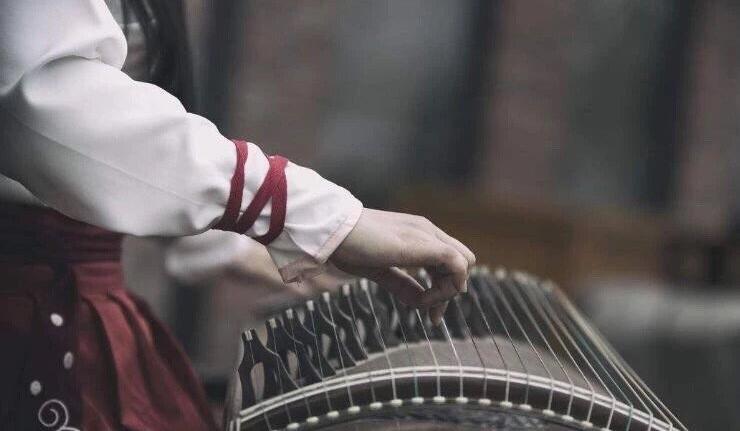
At the same time, hand position is also a very important factor. Unstable center of gravity can greatly affect rhythm and tone. Many beginners only focus on making sounds when practicing and do not pay attention to problems such as wrist collapse and finger bending. Incorrect hand positions may not be obvious at first, but as you progress further in your learning, these problems will gradually become apparent. For example, complex techniques such as tremolo, glissando, and arpeggio all require correct hand positions and solid basic skills to be performed perfectly. Remember to keep your wrist parallel to the surface of the guzheng and your fingers in a naturally curved half-fist shape. Adjust in front of a mirror in time to make the correct posture a muscle memory.
The third mistake, and the one that beginners are most likely to make, is skipping the practice of basic pieces and rushing to play some popular songs. For example, songs like "Blue and White Porcelain" and "A Laugh in the Sea" have beautiful melodies and can give a great sense of achievement when played. However, their rhythms and finger combinations are mostly advanced arrangements. Novices who only master basic techniques such as plucking, picking and brushing will develop bad habits of disordered finger techniques if they directly practice these songs due to insufficient technical reserves, which will instead hinder the refinement of their basic skills.
For beginners learning the guzheng, from adjusting the mindset to practicing basic skills, gradually master sitting posture, hand position, and finger techniques. Practice every day and take each step scientifically and efficiently. Patience and passion are essential attitudes for learning the guzheng. Enjoy the process, enjoy the music, and achieve self-improvement.