19th Jan 2026
The Australian Guzheng: From Chinese Communities to Diverse Stages
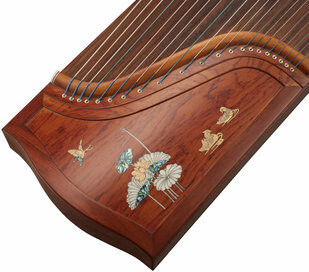
The guzheng, a traditional Chinese plucked string instrument, was introduced to Australia by Chinese immigrants in modern times. After over a century of development, it has evolved from a cultural symbol within the Chinese community to an integral part of the local multicultural ecosystem, serving as a significant medium for cross-cultural exchange.
In the mid-19th century, the discovery of gold in Australia attracted countless Chinese laborers to cross the ocean. In Victoria, Chinese miners brought not only their labor tools but also the cultural imprints of their homeland. Historical records show that in many Chinese settlements, there were already handcrafted guzhengs. Throughout the 20th century, the spread of the guzheng in Australia was largely confined to the Chinese community, where it was often used for self-entertainment by families or as a cultural inheritance passed down by parents to their children.
At the beginning of the 21st century, with the increasing cultural exchanges between China and Australia, the guzheng experienced its first turning point. Chinese musicians formed small Chinese ethnic orchestras in Melbourne, marking the first time the guzheng appeared as a core instrument in professional ensembles, breaking the previous community-bound status. Concurrently, universities began to incorporate Chinese ethnic instruments into their music departments, offering related performance courses, with the guzheng being a key focus.
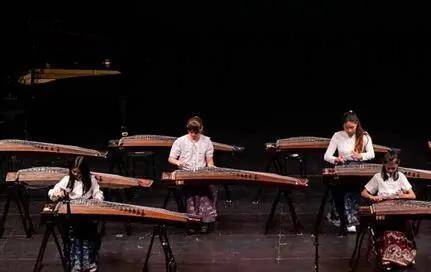
Professional guzheng schools and systematic teaching have brought the instrument to a broader audience, especially among young people. Around 2020, due to the global pandemic, offline guzheng classes were inconvenient, but this led to the rapid growth of online teaching. This shift unexpectedly broke geographical barriers, allowing residents in remote areas of Australia to learn the guzheng, and the student base became more diverse. Digital dissemination has opened new avenues for the popularization of the guzheng in Australia.
Nowadays, major performance ensembles integrate Chinese traditional culture with the guzheng, offering holistic cultural experiences to Australian audiences. This approach not only facilitates the better spread and development of the guzheng in this land but also enables audiences to understand the cultural connotations behind the music while enjoying it.
The century-long cultural dissemination history of the guzheng in Australia is a story of adaptation from the periphery to the center, from singularity to diversity. It has gone through stages from a cultural symbol within the Chinese community, to being embraced by the education system, and then to cultural innovation. This not only allowed the guzheng to take root and flourish in another country but also enriched the cultural fabric of Australia.
This cross-temporal dialogue is bound to compose a more melodious symphony.