15th Feb 2026
The Localization Path of the Guqin in Singapore
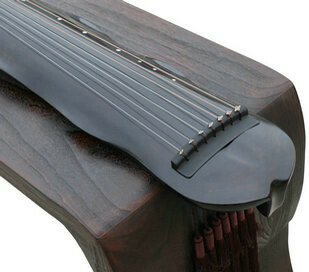
As a core carrier of traditional Chinese music, the guqin has carved out a unique path of localization in Singapore's multicultural soil. From the early private gatherings of a few enthusiasts to its current presence in schools, communities, public spaces, and international stages, the guqin is shedding its aloof image and integrating into the daily cultural life of the Lion City, serving as a cultural bridge connecting the past and the present, as well as the East and the West.
The dissemination of the guqin in Singapore began with the circle-based transmission of private gatherings. Early enthusiasts of the guqin mainly held small-scale meetings in quiet spaces to appreciate the instrument, discuss pieces, and exchange insights, emphasizing the artistic conception and refinement, maintaining the pure essence of literati music. This small-scale yet refined model preserved the cultural core of the guqin and cultivated a stable core audience, laying the foundation for subsequent popularization. As cultural demands grew, the simple private gatherings could no longer satisfy the desire of more people to get in touch with it, and the mode of dissemination gradually became more open and diverse.
Over time, more and more locals began to be curious about the stories behind the guqin. Thus, the guqin gradually moved out of tea houses and clubs and into libraries, cultural centers, shopping mall atriums, and even the stages of street art festivals. Public performances, small exhibitions, and interactive experience activities were held one after another. People no longer needed to understand the tablature or be familiar with the story of "Flowing Water" to stop and listen to the thousand-year-old echoes.
Especially during the annual cultural season or Chinese traditional festivals, the guqin can often be seen. Sometimes it is a midday flash mob performance, and sometimes it is an impromptu accompaniment to a calligraphy exhibition. It is no longer out of reach but has become a part of the city's cultural fabric. Citizens can sit down and try playing a few notes, listen to the teacher explain the differences between the three tones of "pressing, open, and floating", and even print a guqin score to take home. These details make the ancient art tangible and accessible.
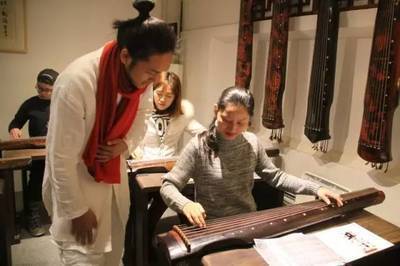
What truly keeps the guqin "alive" is its entry into schools. Some middle schools and art education institutions have begun to incorporate the guqin into their aesthetic education courses, telling its history in a way that children can understand. From the story of Boya and Ziqi as soulmates to how ancient people cultivated their character with the guqin. Some schools have established guqin interest groups, where students not only learn basic finger techniques but also participate in the arrangement of small performances that incorporate modern elements.
Today, the guqin in Singapore retains its quiet and reserved demeanor while also demonstrating an open and inclusive attitude. It does not have to be completely modernized to please the masses, nor does it have to adhere strictly to tradition and alienate people. It follows its own rhythm and has found a gentle yet firm path: not as a relic to be worshipped but as a living cultural practice that participates in contemporary life.
From niche gatherings to urban culture, the path of the guqin's dissemination in Singapore is a balance between upholding tradition and local innovation. In the future, with more innovative practices and cultural collaborations, the guqin will continue to play new chapters in the Lion City, becoming a vivid example of cultural coexistence.