16th Jan 2026
A Scientific Guide for Buying a Guzheng in Australia: From Selection to Maintenance
Under the vast Australian sky, Chinese culture and art have found new soil, and the guzheng is one of them.
However, most of Australia has a tropical desert climate and a temperate continental climate, with an average annual humidity of only 30% to 50%. Especially in the summer in South Australia and Western Australia, the dry air directly threatens the wooden structure of the guzheng, easily causing cracking and deformation. Therefore, both the selection and maintenance of the guzheng deserve special attention.
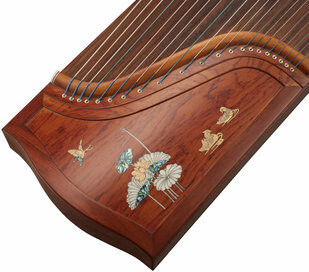
Choosing a guzheng that is well adapted to the Australian climate can save a lot of maintenance troubles. The eastern coast is humid and rainy, while the central and western inland areas are dry and less rainy. The temperature difference between day and night can sometimes reach more than 15°C. Therefore, hardwood is a good choice as it is less likely to have problems such as the lifting of the soundboard, cracking of the side panels, and loosening of the tuning pegs in such extreme conditions. However, black sandalwood can be a preferred choice in Australia. Not only is its wood density high, and the wood structure fine and uniform, but also its moisture content is stable after natural air-drying, which precisely matches the humidity range of most areas in Australia, reducing the risk of deformation caused by drastic fluctuations in temperature and humidity from the root. This type of guzheng not only has outstanding stability but also has a rich and clear tone, with a deep and steady bass and a bright and clear treble, combining practicality and playing experience.

Secondly, paying attention to the structure and craftsmanship details is also an important point in choosing a guzheng. Check the instrument for any fine cracks, especially at the contact point between the soundboard and the bridge. In a simulated dry environment, the tuning pegs should maintain a moderate tightness, neither sliding and causing pitch changes nor being too tight to turn due to excessive expansion. Generally speaking, guzhengs with a moderate soundboard thickness and a solid soundbar structure are often more stable than overly thin models.
At the same time, targeted maintenance can better extend the lifespan of the guzheng. The indoor humidity in Australia is often below 40%, while the ideal humidity range for the guzheng is 50% to 60%. In a dry climate, especially in summer, using a humidifier is the most effective way to increase humidity, but please avoid directly humidifying the instrument. If conditions are limited, you can place a basin of water in the music room or hang a dedicated instrument moisture box inside the guzheng's resonator.
In this land of Australia where diverse cultures blend, choosing a guzheng that suits the climate and maintaining it scientifically and meticulously can make the guzheng withstand the tests of dryness and temperature differences, freely flowing in the sunlight of the Southern Hemisphere. When the fingertips glide over the strings, the melodious sound is not only a display of skill but also a cultural resonance across mountains and seas. May every lover of the guzheng be accompanied by it, enjoying the clear and pleasant sounds.