
28th Oct 2026
A Thin Membrane Breaths Life into Bamboo
Among traditional Chinese musical instruments, the dizi flute stands out as the most understated yet representative wind instrument. Shaped with breathtaking simplicity, it is nothing more than a single green bamboo stalk pierced with several sound holes. Free of complex mechanical structures and ornate carvings, the dizi flute produces melodies that perfectly capture the spirit of mountains and rivers, brimming with raw natural vitality. Many listeners are deeply enchanted by its distant, ethereal tunes steeped in wilderness charm, yet few ever discover what sets the dizi flute fundamentally apart from Western wind instruments.
For centuries, the dizi flute has accompanied people across China. It can be heard echoing in folk festivals, played alongside local operas, and performed as a solo instrument on concert stages. It is not confined to concert halls alone; in old times, travellers would carry a small dizi flute to play along their journeys, scholars would play it beneath the moonlight to express their inner thoughts. The dizi flute is deeply woven into the fabric of Chinese daily life and artistic imagination, far more than merely a musical tool.
As a time‑honored Chinese wind instrument with thousands of years of history, the dizi flute retains a plain, unadorned form. Carved from natural bamboo with neatly cut sound holes, it has no intricate keys or lavish decorations, embodying the quiet, far‑reaching artistic conception of Eastern music. The secret behind the dizi flute’s unique appeal lies not in its simple appearance, but in one tiny, fragile component hidden on its body — the reed membrane.
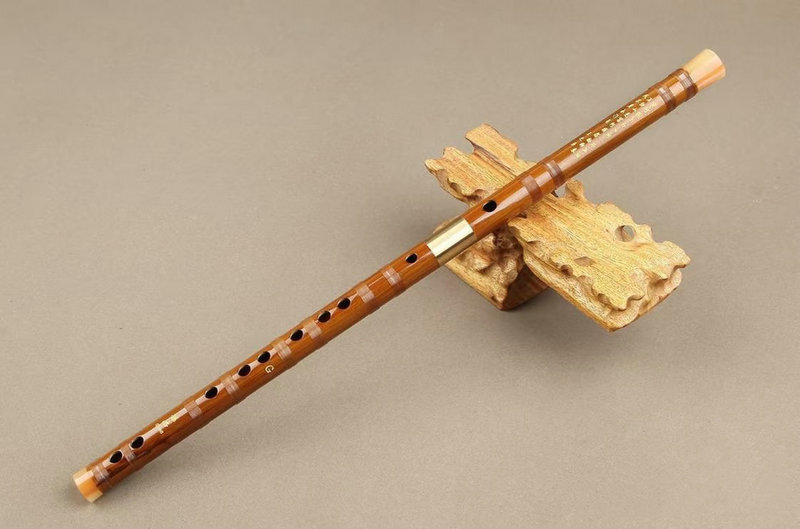
Nearly everyone who first hears the dizi flute is captivated by its bright, translucent and lilting tone. Only a handful of listeners realise that this one‑of‑a‑kind sound originates from a minuscule detail that is easily overlooked. Most people focus their attention on melody and performance skills, rarely pausing to wonder where this special, unforgettable timbre comes from.
The majority of traditional wind instruments follow a fixed acoustic principle: sound is produced by direct air vibration inside the tube, yielding clean, steady and level tones. The dizi flute operates entirely differently. Its liveliness and melodic charm stem from a special opening on the flute body, covered by a thin natural film.
This membrane is stripped from the inner wall of wild reeds, thin, translucent, soft and fragile with almost no elasticity. It is precisely this fragility that gives the dizi flute its singular tonal character. Played without the membrane, the hollow bamboo tube produces dull, heavy and monotonous notes lacking depth. Once the thin reed membrane is stretched over the hole, airflow passing through the tube sets the film trembling gently. Natural fluctuations and resonance enrich the plain sound, creating a soft, undulating tone that cannot be replicated by any other wind instrument worldwide.
Thanks to the membrane’s delicate nature, playing the dizi flute demands far more than just fingerwork and breath control. Every performer must learn to adapt to this fragile film. In humid weather, the membrane loosens, making the tone soft and unfocused; in dry air, the film tightens up, resulting in stiff, harsh notes. Minor shifts in temperature, humidity and wind will instantly alter the dizi flute’s timbre. Even the difference between indoor and outdoor performance spaces can change how the membrane behaves.
For this reason, pasting and tuning the membrane is an essential pre‑performance ritual for all dizi flute players. Musicians carefully stretch the film, smooth out wrinkles, and repeatedly adjust its tension until it is perfectly balanced — neither too loose nor too taut. Only then can a clear, melodious flute tune come to life. This seemingly trivial procedure embodies the subtle craft unique to Chinese musical instruments and encapsulates the aesthetic wisdom of Eastern music. Many experienced dizi flute players say tuning the membrane is almost like having a quiet conversation with their instrument.
Western music prioritises precision, order and uniformity, striving for consistent, standardised tone colour. The aesthetic of the dizi flute moves in the opposite direction: it embraces change and flows in harmony with nature. Even with the same dizi flute and the same musical piece, variations in membrane tension, breath strength and the player’s mood will produce entirely different artistic flavours. There is no fixed “standard sound”, only artistic conception shaped by the moment and the heart.
Audiences hear the drifting melody of the dizi flute, yet they never see the tiny detail that makes such beautiful sound possible. The firm bamboo builds the instrument’s frame, while the soft membrane breathes soul into the music. Having endured for more than a thousand years, the dizi flute touches people’s hearts not through dazzling virtuosity, but through this subtle Eastern poetry rooted in nature and inner peace.
That thin layer of reed membrane turns an ordinary bamboo tube into an instrument filled with the sound of wind and water, and infuses simple notes with emotion and warmth. Bamboo forms the body; the membrane births the charm. This is the dizi flute of China — simple, unassuming, and brimming with the most touching Eastern romance.