3rd Feb 2026
Buying a Guqin Online: How to Choose Between Fir, Paulownia, and Pine Without Making a Mistake
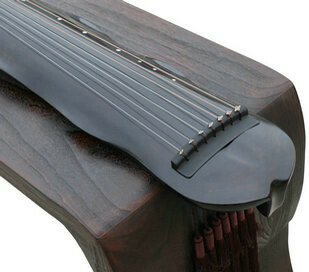
The material of a guqin is the core factor determining its tone quality, texture, and lifespan. When purchasing online, you can't touch the instrument, so you have to rely on pictures and descriptions to judge the quality of the material. This can easily lead to the mistake of "judging by appearance rather than substance". The mainstream materials for guqins are fir, paulownia, and pine, which have significant differences in tone quality, suitability for craftsmanship, and price range. Beginners need to make precise choices based on their needs and budget to avoid material traps.
Fir wood is the "golden choice" for guqin materials and is a classic material favored by luthiers throughout history. High-quality fir guqins are often made from old roof beams, which have been naturally dried for decades or even hundreds of years. The wood is stable in structure, has a moderate density, and has excellent resonance, strong resistance to deformation and cracking, and is more durable. Its tone quality is characterized by warmth, richness, and strong penetration. The low-frequency resonance is fuller, the overtones are clear and transparent, and the pressed notes are full and stable. As the years go by, the tone quality becomes more mellow and reserved, forming a unique charm of the guqin, making it more suitable for performing deep, heavy, or evocative pieces such as "Guangling San" and "Xiaoxiang Shuiyun". Online, the price of a profesional aged fir guqin is usually around $1,000, while an entry-level aged fir guqin costs around $700 to $800.
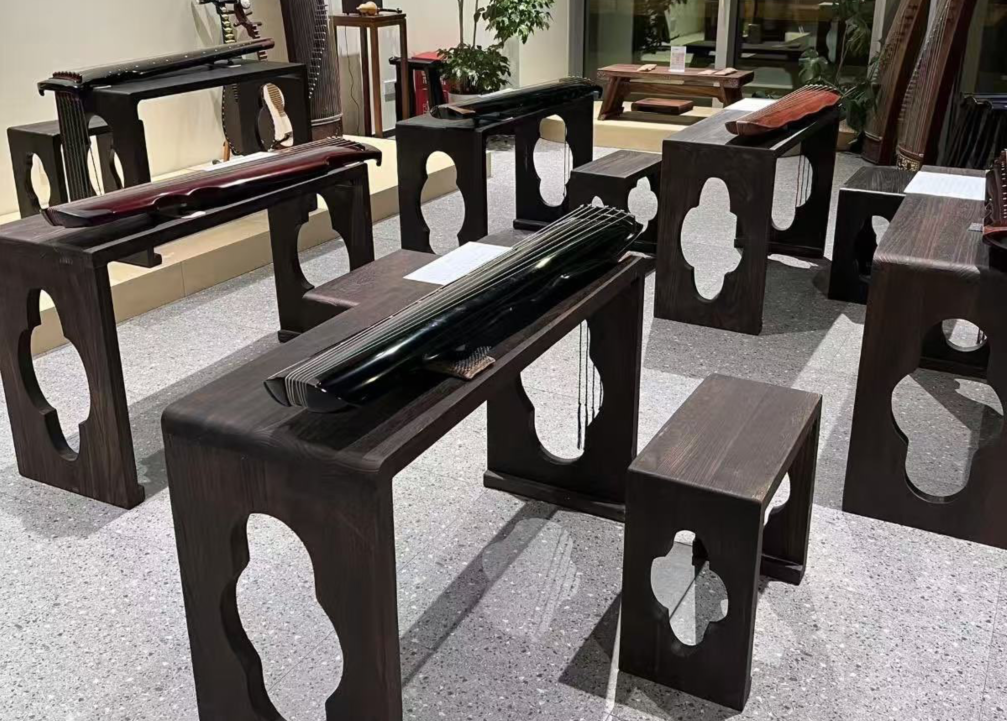
Paulownia guqins are a cost-effective choice for beginners. It grows quickly and has a light texture, is widely used in the production of entry-level Guqins. The tone quality of paulownia guqins is characterized by brightness, clarity, and a larger volume. The overtones are clear and lively, and the pressed notes feel light, making it easier for beginners to quickly find the right touch. It is more suitable for performing light, lively, or melody-rich pieces, highlighting the crisp quality of the sound. In terms of price, entry-level paulownia guqins are usually between $300 and $600, and a slightly better paulownia guqin can cost around $700.
Pine guqins are relatively rare in the market and are often used as niche choices or transitional options for beginners. Pine is hard, with clear grain, and its tone quality is characterized by clarity and high-pitchedness. However, its resonance is slightly inferior to that of fir and paulownia. The tone quality does not change much over long-term use and lacks the "nurturing" charm of the Guqin. Its price advantage is obvious, making it suitable for beginners with limited budgets who only plan to use it for a short time.
Paulownia has a "quickly formed" tone quality, which can be clearly heard in the new guqin stage, but the improvement space for long-term use is relatively limited. Paulownia does not have a significant "nurturing" effect. As the usage time increases, fir wood gradually adapts to the vibration, and the tone quality becomes more mellow and rich, with a large improvement space. So, fir wood guqins are the mainstream choice for mid-to-high-end guqins and is more suitable for players or collectors who pursue tone quality layers and long-term use.
Only by choosing the right material can the guqin become a companion for many years, flowing with warm and long-lasting sounds under your fingertips.