29th Jan 2026
Daily Practice Plan for Beginners of Guqin: Efficient Entry, No Blind Practice
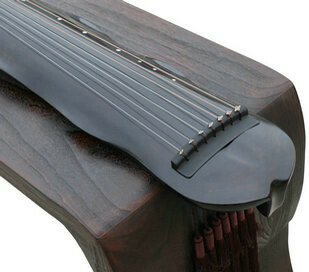
For guqin beginners, blind practice not only fails to yield results but may also lead to bad habits and even dampen the enthusiasm for learning. True efficient entry requires a scientific practice plan. There is no need to pursue overly long practice sessions, the key lies in "precise effort". The following daily practice plan tailored for beginners covers time allocation, content priority, and key points to avoid pitfalls, helping you steadily build a solid foundation and quickly find the rhythm of practicing the guqin.
The recommended daily practice time is divided into three core stages, balancing the consolidation of basics, skill practice, and interest cultivation. The first stage is "Warm-up and Basic Finger Techniques". At the beginning, there is no need to rush into playing pieces. Start with a 5-minute hand relaxation exercise. Let your hands hang naturally and swing, move your finger joints to avoid stiffness and awkwardness during finger technique practice. Then focus on the basic finger techniques of the right hand, which are the core of guqin performance. During practice, pay attention to keeping your wrist relaxed, touching the strings with the pads of your fingers, and applying even pressure to ensure that each finger technique has the correct angle and force application. The left hand should focus on practicing the basic actions of pressing the strings and playing harmonics, feeling the vibration of the strings, and finding the balance point of finger force control to avoid pressing the strings too tightly and causing finger pain.
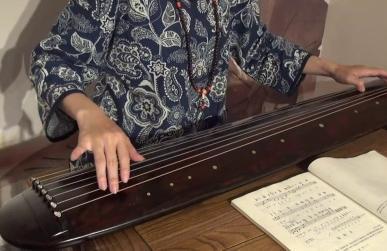
The second stage is "Sectional Practice of Opening Pieces". Beginners do not need to aim for too many pieces, select 1-2 classic opening pieces, such as "Xianweng Cao", which has a simple rhythm and a gentle tempo, allowing for quick coordination between the left and right hands. When practicing, avoid playing from start to finish. Instead, break it down by musical phrases, practice each hand separately until familiar, the right hand masters the rhythm and tempo, and the left hand accurately finds the pressing positions. Then gradually practice with both hands together. Practice each section 3-5 times, and if there are any sticking points, focus on strengthening them. For example, if the coordination between the left and right hands is not smooth in a certain phrase, slow down and repeatedly practice until it flows naturally.
The third stage is "Review and Interest Extension". After practice, spend a few minutes reviewing the weak points of the day, such as uneven force in the Gou and Tiao finger techniques, or certain sections where the hands still have difficulty coordinating. Record these as the focus of the next day's practice. Then, play a familiar phrase at will, without worrying about details, simply enjoying the beauty of the guqin's sound to maintain interest in learning. If there is enough time, you can also briefly learn about the background story of the piece you played, adding a sense of cultural immersion.
Three key pitfalls to avoid: First, blindly extending practice time. Novices have limited attention spans, 30 minutes of efficient practice is far better than an hour of perfunctory practice. Second, skipping the basics and directly practicing difficult pieces. Unstable finger technique foundations can lead to distorted movements that are difficult to correct later. Third, neglecting rhythm training. Although the guqin emphasizes artistic conception, rhythm is the framework. Playing without rhythm will only result in chaos.
The key to guqin entry is gradual progress. This daily practice plan does not aim for quick success, it only requires consistent daily implementation. This way, you can solidify your foundation and avoid detours. As your finger techniques become more proficient and your rhythm more stable, you will truly enter the hall of this ancient art.