
12th Nov 2026
Dongxiao Flute: An Ancient Bamboo Instrument Named for Its Shape and Praised for Its Melody
Among many traditional bamboo wind instruments, the dongxiao flute carries a quiet and distant charm in its name. Unlike the straightforward titles of di, xun and sheng, the two chinese characters for dongxiao evoke a sense of openness, transparency and calm. Many people listen to and play the dongxiao flute for years, yet few know the true origin of its name or the full story behind its evolution. The dongxiao flute has not always been called by this name. Its title, form and temperament carry unique stories shaped by time.
The core of the name lies in the character “dong”, which marks its biggest difference from other xiao-style instruments. Ancient bamboo xiao instruments were mostly panpipes, made of multiple bundled tubes with closed ends and complex structures. They produced bright, clear tones and were mainly used in court rituals. As dynasties changed, single-tube vertical bamboo wind instruments gradually gained popularity. Ancient craftsmen noticed that this single bamboo tube ran straight through from top to bottom, with no blocks or partitions inside. Air could circulate and vibrate freely within the hollow cavity. So they named it dongxiao, meaning hollow xiao.
The old annotation “it is hollow all the way through, hence the name dongxiao” perfectly explains where the name comes from. Unlike blocked wind instruments, the dongxiao flute has no plugs or barriers inside the tube. This fully open structure creates its distinctive tone. Air flows through the hollow passage without obstruction. Its vibration unfolds slowly, without sharp bursts, leaving soft, spreading reverberation. This is why the sound of the dongxiao flute can settle the mind and bring quiet focus.
From the perspective of historical development, the dongxiao flute has shed the grand identity of court ritual music and slowly formed an elegant style favored by scholars. Early vertical bamboo xiao had rough shapes and irregular holes, simple folk instruments for casual playing. After the han and tang dynasties, educated people preferred gentle, quiet sounds and avoided loud, lively tunes. They refined the single-tube xiao, adjusted hole positions, smoothed the tube surface and optimized the blowing edge, gradually forming the standard dongxiao flute we know today.
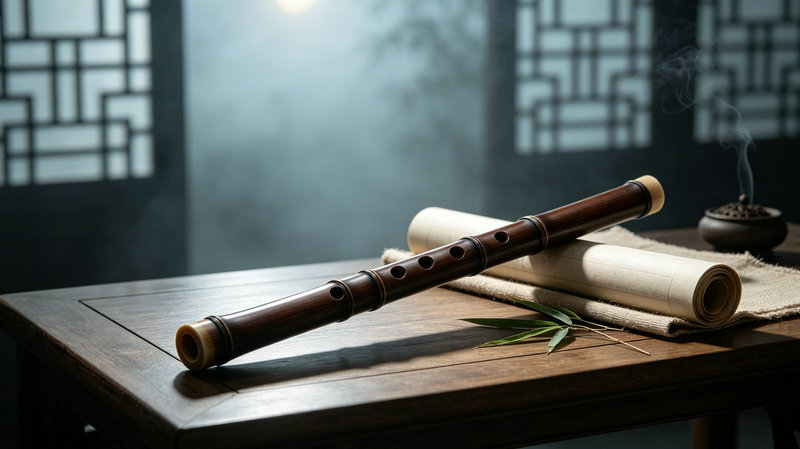
Compared with the lively bamboo di, the dongxiao flute has long been linked to mountains, moonlight and peaceful moments since its shape was finalized. Ancient players often performed alone under bamboo trees or on quiet nights, not for crowds or applause, but to express inner feelings through sound. It does not produce fancy, dramatic tones or powerful high notes. It relies on its hollow, open cavity to deliver calm, lingering melodies that reflect the gentle mindset of ancient literati. For thousands of years, the dongxiao flute keeps its simple design: one plain bamboo tube, several finger holes, minimal decoration. The simpler the form, the quieter the sound and the deeper the meaning.
Many ancient musical instruments faded out of daily life over time, but the dongxiao flute has been passed down. Its survival is not only the continuation of an instrument shape, but also the inheritance of an oriental quiet aesthetic. The hollow bamboo tube stands for an open and honest state of mind. Its slow, distant sound represents a peaceful, unrushed attitude toward life.
Today, the dongxiao flute remains one of the most representative traditional instruments of oriental style. It is no longer limited to court ceremonies or scholar gatherings. This plain bamboo tube still plays calm and peaceful eastern music. Once you understand the origin of its name and its long history, you can truly appreciate the openness, peace and depth hidden in its sound.