9th Feb 2026
From Obscurity to Hit: Young People Buy Guqin as a New Fashion
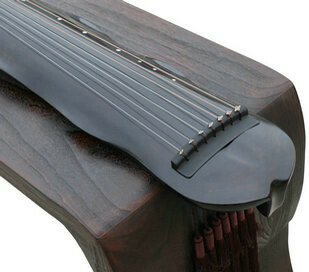
When guqin is mentioned, it is often associated with a niche group and seen as a pastime for scholars and literati. However, in the current wave of "national trend", it has become a new favorite among young people. On Bilibili, a video of "Flowing Water" accompanied by ink-wash animation has filled the comment section with "tearful eyes". On Douyin, a Hanfu-clad girl playing the guqin with bamboo shadows in the background has received over a million likes. On Xiaohongshu, bloggers showcase a corner of their study with a guqin, incense sticks, and tea cups, which have become the standard for an "ideal life".
Firstly, the medium has changed. Previously, the transmission of the guqin relied mainly on offline music schools, with the audience limited to the middle-aged and elderly. However, the rise of short videos and Bilibili has broadened the dissemination channels. Just as Bilibili bloggers have gone viral with a secondary animation style, they have also warmed up the entire folk music circle. By adapting classic pieces into popular melodies or presenting them with plots and scenery, they have made ancient music more accessible and interesting. On short video platforms, guqin performance clips have received millions of views. Bloggers showcase the charm of the guqin in everyday scenarios, and the visual combination of "Guqin + Hanfu" blends the elegance of traditional clothing with the distant sound of the guqin, aligning with the aesthetic preferences of young people and making the guqin move beyond its niche status to become a popular symbol that can be seen, heard, and imitated.
Secondly, the aesthetic has awakened. The "national trend" has long transcended logo prints and Chinese red. What young people truly desire is a cultural expression with roots. The guqin is not flamboyant or noisy, with a low-pitched sound and a simple form, which aligns perfectly with the current popular "relaxed" aesthetic. When fast fashion becomes tiring, it is the slower and quieter things that become more precious. Wearing Hanfu and playing the guqin is not just about taking photos for social media, but a stance.
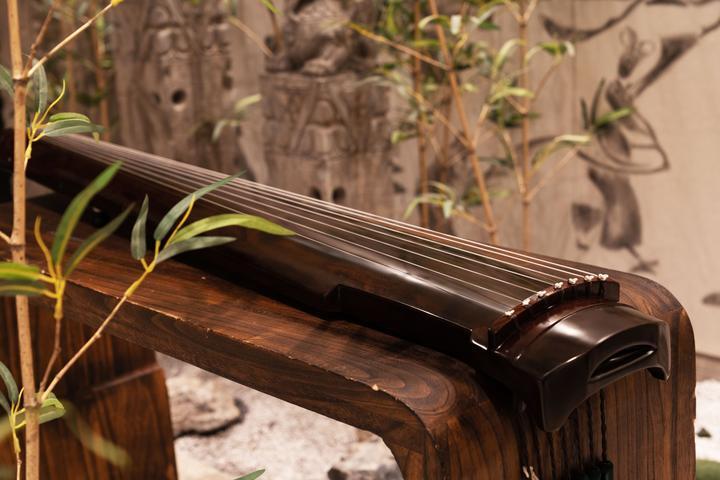
The alignment of spiritual needs has made the guqin a source of comfort for young people. Today's young people face dual pressures from studies and careers, and the soothing and distant sound of the guqin, in line with traditional health concepts, can relieve anxiety and heal the soul, providing an outlet for their emotions. At the same time, the cultural heritage of the guqin, which has been passed down for thousands of years, allows young people to experience the ancient people's sentiments towards the country and nature while finding spiritual sustenance in the fast-paced life.
Of course, there are also concerns in this craze. Some videos focus more on form than content, turning the guqin into a mere background prop. True inheritance ultimately lies in the real touch between the fingers and the instrument's surface.
The return of the guqin is not a last gasp but a rebirth. It is precisely because this generation of young people no longer view tradition as a burden but as a resource that can be approached, transformed, and relied upon for a livelihood. When the sound of the guqin rings again, it is not just the echoes of a thousand years ago, but a gentle affirmation by the younger generation of a nation of their cultural roots.