
26th Oct 2026
Hidden Hui on the Wooden Body, Contemplating the Heart Beneath Strings(not)
Many people first encounter the guqin through the timeless tale of High Mountains and Flowing Water, the story of bosom friends, and remember the legendary music played by Ji Kang before his execution. They marvel at this instrument’s over 3,000-year history. The guqin has been passed down for more than three millennia. Records of it can already be found in The Book of Songs. During the Wei and Jin dynasties, its form of seven strings and thirteen hui was finalized, and it has been handed down in this shape ever since. Yet few people notice the thirteen tiny dots on its surface — the hui. The subtle romance of the ancient Chinese, embedded within the guqin, resides in these understated marks.
Unlike the guzheng, which has distinct, movable bridges, the guqin relies entirely on its thirteen hui to define pitch and capture resonance. These hui are usually inlaid with shell or jade, resting quietly on the paulownia wooden body. Their positions are not carved arbitrarily; each spot is calculated precisely according to equal divisions of the string length. The thirteen hui correspond to the twelve months of the year plus one intercalary leap month. Ancient craftsmen carved the cycles of seasons and time into the wood of a single qin, embodying the philosophy of observing celestial movements and seasonal rhythms.
In many Western musical systems, pitches are fixed and clearly defined. But the charm of the guqin extends beyond the definite notes marked by the hui. This is why ancient qin makers would carefully calibrate the hui only after carving the wooden body and stringing the instrument. The hui are not decorative ornaments for performance; they act as signposts guiding the player’s fingers.
Playing the guqin features stopped notes: the left hand presses beside the hui, while the right hand plucks the string, letting the tone shift with the movement of fingers. The hui serve only as references. The truly touching charm lies in the unmarked spaces between them. These gaps are reserved for players to express emotions, breath and inner state. Those sliding tones and lingering portamentos do not sit right on the fixed hui, but exist between the tangible and the empty. This is the unique beauty of the guqin: fixed marks set the rules, while empty space creates artistic conception.
This also marks the biggest difference between the guqin and other instruments. Most instruments pursue precise, loud solid tones, while the guqin thrives on the interplay of solidity and emptiness. It was not created for noisy grand performances. Its sound is restrained and gentle, inviting inward listening — a conversation between the player and their own heart. The thirteen hui are the scales mapped from heaven and earth, while the movement between them gives birth to the player’s spontaneous emotions. The hui are visible, yet the lingering resonance remains invisible.
The thirteen hui also carry the symbolism of a noble gentleman. The guqin was a tool for ancient scholars to cultivate themselves. It was never meant to make loud sounds to please others, but to encourage self-reflection. Each hui acts as a measuring ruler: a scale for musical pitch, and also a metaphor for propriety in human conduct. As your gaze falls on the hui and your fingers glide between them, strings vibrate and deep, distant tones unfold. You come to understand the quiet wisdom hidden within these thirteen dots. Each hui stands for order; every gap holds countless feelings. Without ornate embellishments, restrained and serene, this is the refined Eastern grace the guqin has preserved for over three thousand years.
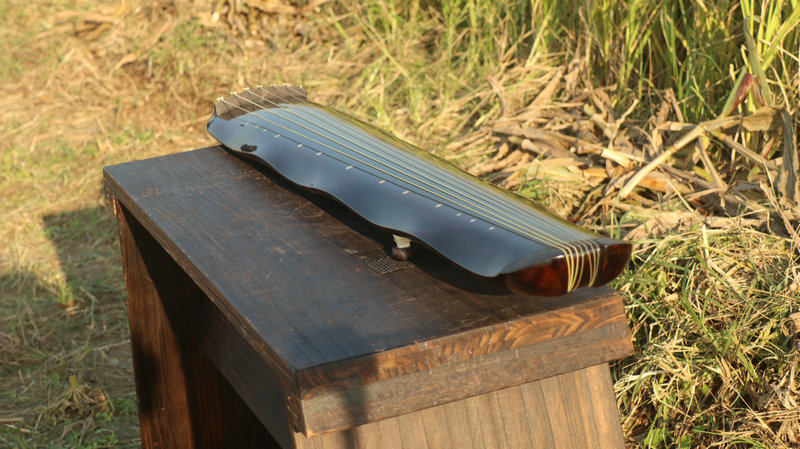
For centuries, scholars playing the qin would let their eyes drift gently across this row of hui. Tao Yuanming could find solace even on a stringless qin, for he understood the core truth: the hui are merely form, while the music of the heart is what truly matters. We often admire the elegance of Plum Blossom Melody in Three Variations and the remoteness of Wild Geese Descend on Sandbank, captivated by the stories behind the melodies, yet overlook those small dots on the qin surface. Without them, those soft, lingering sliding notes and quiet, soul-touching resonance could never exist.
A block of paulownia wood, thirteen hui marks, seven silk strings. The spirit of the guqin never lies in grand slogans of ritual and music. Its romance hides in tiny details: carving the cycle of time onto the qin surface, turning the sense of proportion into hui markers, and reserving empty space for musical expression.
There is no need to chase thunderous applause. Qin music is first and foremost a conversation with oneself. When your fingers rest on the qin and travel slowly following the hui, soft notes spread all around. You may feel the peace the ancients wove into these thirteen dots. Each hui carries a moment of time; each string calms the mind. This is the subtle, restrained elegance of the guqin, belonging uniquely to Eastern literati.