
29th Oct 2026
The Breath Within Bamboo——Xiao(not)
Among ancient Chinese wind instruments, the xiao flute carries a uniquely serene temperament. It is crafted from bamboo just like the dizi flute, yet their biggest difference lies in one tiny structure: the mouthpiece. This overlooked detail shapes the entire timbre and spiritual character of the xiao flute.
The dizi flute gains its lively, rippling sound from the vibration of its reed membrane. The xiao flute has no reed membrane at all. Its sound comes entirely from air swirling and resonating inside the bamboo tube, and everything begins at the top mouthpiece of the xiao flute. The top end is sealed by a natural bamboo node. Artisans carve a sloped, inward‑cut notch along the edge of this node to create the blowing edge. There is no extra reed; this carefully polished angled surface splits and guides the player’s breath. When exhaled air brushes across this carved edge, part of the airflow travels down into the hollow tube to create vibration, while the rest escapes outward. The delicate balance between these two streams decides the final quality of the sound produced by the xiao flute.
Even a tiny difference in the carving angle of this mouthpiece changes the personality of a xiao flute. A steeper angle creates thin, cool and haunting tones; a gentler angle delivers warm, rich sound. When master craftsmen make a xiao flute, they repeatedly test the sound and shave the edge little by little. The tiniest adjustment can completely transform the mood of the instrument. Unlike the dizi flute, whose tone can quickly be adjusted by retuning the reed membrane, every subtle sound variation of the xiao flute arises from the intimate interaction between the player’s breath and this carved mouthpiece.
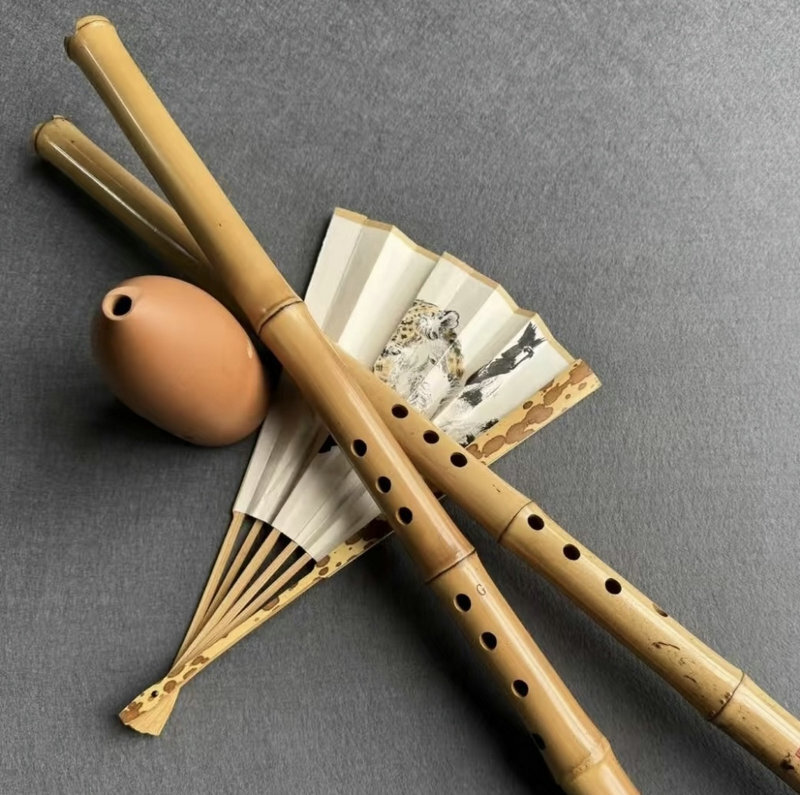
The xiao flute boasts a long history in China. Since ancient times, scholars and hermits loved to play the xiao flute alone in quiet spots, beneath the moon or among mountains. It was rarely played during noisy festivals. The xiao flute is an instrument for solitude and reflection, for expressing inner feelings hard to put into words. When you listen closely to the xiao flute, you can sense quietness wrapped within every note — and this quietness originates from the split breath at its mouthpiece.
Since no reed membrane is required, players of the xiao flute skip the membrane‑pasting and tuning work that dizi flute players must complete before performance. That does not make the xiao flute easier to master, however. Its sound heavily relies on extremely subtle breath control, and matching your breath to the mouthpiece is the hardest skill to learn. Minor changes in blowing angle or breath strength, even a slight shift in where the air hits the carved edge, will completely alter the emotional tone of the music. Soft, gentle breath sliding over the mouthpiece produces hazy, warm notes. Deep, sustained breath brings solemn, far‑reaching feeling. To master the xiao flute, players practice endlessly, uniting their own breathing rhythm with the mouthpiece and hollow bamboo tube.
The aesthetic philosophy behind the xiao flute also differs from the dizi flute. The dizi flute embraces natural shifts brought by its reed membrane and changing surroundings. The xiao flute, on the other hand, searches for quiet eternity within simplicity. All of its musical nuance emerges from the breathing conversation between human and instrument. It does not chase loud, eye‑catching sound. The charm of the xiao flute lies in restraint and blank space, a core idea in traditional Chinese art: less is more. Its melodies leave room for the listener’s imagination to wander freely.
Many people first encounter Chinese bamboo instruments through the bright tunes of the dizi flute, yet once they hear the deep, gentle sound of the xiao flute, they discover its special power. The dizi flute sings of mountains, rivers and the outer world; the xiao flute whispers inward to your heart. Both grow from bamboo. The dizi flute gets its lively undulating sound from a thin reed membrane, while the xiao flute captures long, calm breath through one carefully carved notch at its top.
This is China’s xiao flute: simple and restrained. With only a small cut on the top of a bamboo tube, it carries deep, timeless beauty.