14th Feb 2026
The Buying of Guqin: Where Does the True Value of High-End Guqin Lie?
In the world of guqin, price is never a simple figure. Some people spend a few hundred dollars on a guqin to practice basic skills and test the waters, while others are willing to pay thousands or even tens of thousands of dollars to find a satisfactory instrument. To outsiders, the seven strings and thirteen frets of a guqin may seem similar, but why is there such a huge price difference? If it were merely regarded as a musical instrument, it might be hard to understand where this "expensiveness" comes from. But for those who have truly delved into the guqin, it is no longer just a tool for making sounds, it is the accumulation of time, the crystallization of craftsmanship, and a private dialogue between sound and the soul.
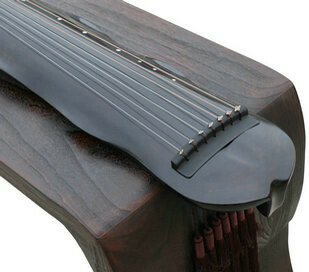
The sound of a fine guqin grows from the wood. Not just any wood can fulfill this role. Traditional guqin making emphasizes the use of old materials, such as old fir wood and old paulownia for the soundboard, which are light, porous, and stable, capable of transforming the force from fingertips into a lingering resonance. The backboard is often made of old catalpa or hard wood, which is solid and heavy, supporting the entire resonance of the instrument. These woods often come from dismantled old house beams and have been naturally air-dried for decades. They are no longer just materials but seem like lives tamed by time. The scarcity of these naturally air-dried old materials and their high cost form the foundation for the sound quality of the guqin.
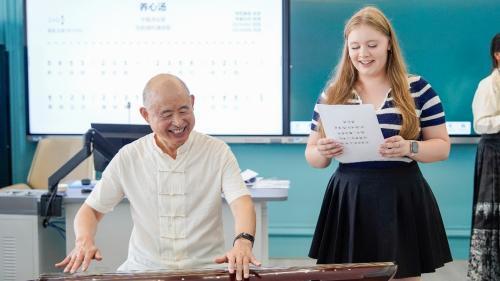
What makes this piece of wood produce sound is the pure handcrafted artistry. Mass-produced guqins by machines prioritize efficiency and standardization, but a high-quality guqin requires over a hundred processes, including material selection, shaping, sanding, lacquering, foot installation, and stringing, taking one to two years or even longer. Guqin makers rely on their experience to listen to the wood and adjust the depth of the cavity and the curvature and thickness according to the characteristics of each piece of wood, striving to bring out its best sound. No two guqins are exactly the same, just as no two leaves are identical. This uniqueness is a warmth that assembly lines can never replicate.
In addition to the material and craftsmanship, high-end guqins also carry cultural and collection value. The guqin is a World Intangible Cultural Heritage. Guqins made by famous craftsmen are not only musical instruments but also works of art and cultural carriers. As time goes by, high-quality guqins become more stable in sound and better in tone, offering a stable value preservation and appreciation space. For collectors, buying a guqin is not only about meeting the need for playing but also about inheriting and protecting traditional culture.
Many people mistakenly think that high-end guqins are just "expensive" without realizing the value behind the materials, craftsmanship, sound quality, and cultural accumulation. The essence of buying a guqin is choosing a companion that will stay with you for many years or even a lifetime. High-end guqins are worth it because they offer long-term value in terms of sound quality, feel, durability, and cultural significance to the player.
When buying a guqin, it is not necessary to pursue high prices, but it is essential to understand the value behind them. A truly good guqin is expensive for a reason and is worthy of being carefully chosen and cherished for a long time by every true lover of the guqin.