13th Jan 2026
The Centennial History of the Guzheng in New Zealand
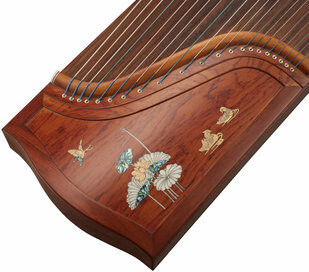
The history of the guzheng's introduction to New Zealand is a story of cross-ocean cultural exchange. This instrument, which embodies the ancient Chinese ritual music, did not remain in China due to the barriers of mountains and seas. Instead, it was brought to New Zealand along with the footsteps of Chinese immigrants.
So, how did the guzheng travel from distant China across the ocean to New Zealand? And how did it blossom in this new land?
The origin of the guzheng's introduction to New Zealand can be traced back to the overseas migration wave of the Chaozhou merchants in modern times. From the late 19th century to the early 20th century, some of the Chaozhou merchants who ventured to the South China Sea extended their journey to New Zealand. In their luggage, besides the hope of making a living, they also carried the cultural imprints of their homeland. The Chaozhou guzheng, as one of the four major schools of guzheng in China at that time, thus found its way to New Zealand. In gatherings within the Chinese community and during festive celebrations, the guzheng always brought people together, serving as a bond connecting everyone.
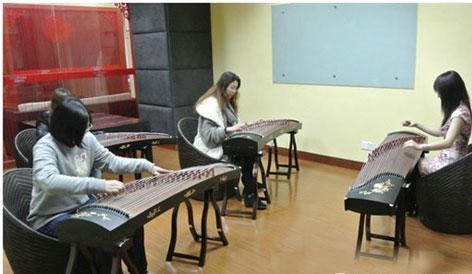
However, the real breakthrough for the guzheng in New Zealand came in the 21st century, thanks to a young player named Chen Xigui, who brought a significant shake-up to the local guzheng scene. He opened the door to the public through performances in schools, churches, and nursing homes, and gained numerous fans with pieces like "Celebrating the Lantern Festival". This made the guzheng become a symbol of both social interaction and culture. Moreover, he attempted to blend the guzheng with rock music, allowing Western audiences to embrace this Eastern classical instrument through familiar rhythms. Chen Xigui's contributions were not limited to spreading the charm of the guzheng through performances, he also devoted himself to researching multi-row fret guzheng, maintaining the traditional pentatonic scale while expanding its ability to play semitones and harmonies, thus enabling better integration with Western instruments.
The spark of an individual is always limited. Only when it converges with the fuel of an organization can it become an unquenchable flame. The systematic spread and popularization of the guzheng in New Zealand are attributed to the efforts of professional teams. From the perfect combination of the guzheng with percussion to its diversified development, the guzheng has gradually ventured further, entering libraries, nursing homes, concert halls, and the daily lives of New Zealand families. They not only target Chinese children but also welcome all those interested in Eastern music. The courses start with basic finger techniques and gradually progress to classic pieces. Regular concerts are also held, moving from the Chinese community to theaters and then to concert halls, with local residents evolving from mere listeners to learners.
Today, in both large and small cities of New Zealand, the guzheng is no longer a stranger. This instrument, once unfamiliar to this land, has now become a beautiful sight.
The cultural dissemination is not merely about replication and preservation, it is about breathing new life into it and allowing it to blossom in its new soil.