23rd Jan 2026
The Development History of the Guqin in Sydney
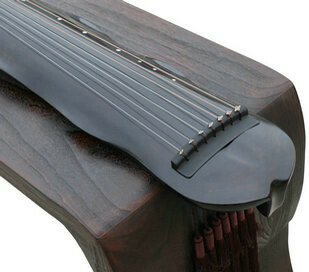
The guqin, an ancient instrument carrying the weight of cultural heritage, although its origin can be traced back to over three thousand years ago in China, has a relatively short history of development in Sydney. Its growth trajectory is closely linked to the waves of Chinese immigration and the deepening process of cultural exchanges between China and Sydney.
The spread of the guqin in Sydney is largely attributed to cultural activities within the Chinese community and the individual efforts of musicians. In the second half of the last century, as waves of Chinese people traveled to Australia for study and settlement, this cultural symbol from their homeland crossed the ocean. Early dissemination was mainly through individual teaching and small-scale performances, providing a cultural solace for Chinese people in Sydney and opening a window for local residents to understand traditional Chinese culture. It carved out a peaceful spiritual haven in the bustling city, laying the cultural foundation for the subsequent development of the guqin.
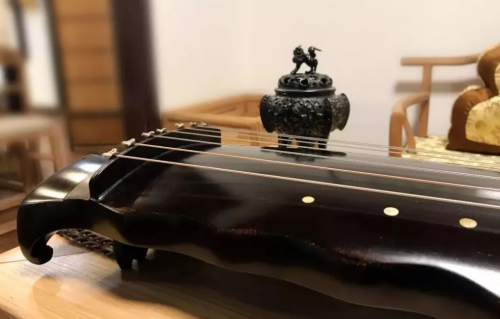
The influence of the guqin in Sydney has gradually expanded, and several key events are worth mentioning. In 2011, renowned guqin player Jin Wei held a solo concert at the Sydney Conservatorium of Music. This concert, hosted by the Confucius Institute at the University of Sydney, was part of the "Australia-China Year of Culture" and received widespread attention, with tickets selling out early, marking the high recognition of guqin art in the local area. In recent years, the guqin has also entered the classrooms of the University of Sydney, establishing a standardized teaching system. Some scholars have offered specialized courses on the guqin at the University of Sydney's School of Music, exploring the relationship between the guqin and the environment as well as the evolution of traditions. They not only teach finger techniques but also interpret some classics to help guqin enthusiasts understand the philosophical implications behind the instrument, which has been warmly welcomed by students.
Today, the guqin in Sydney is no longer confined to the Chinese community. It is integrating into local culture and contemporary development with a more open attitude. Guqin players actively participate in various multicultural events, such as performing on the stage of the "Australia-China Spring Festival Gala" and in public places like Sydney Town Hall, allowing guqin culture to shine with new brilliance. Some musicians have begun to experiment with combining the guqin with modern musical elements, engaging in cross-border innovation. For instance, some players have combined the guqin with electronic surround sound and even collaborated with rock bands, exploring the possibilities of the guqin in contemporary music, attracting the attention of more young audiences.
In conclusion, although the development history of the guqin in Sydney is not long, it has successfully taken root and flourished in the multicultural soil with its unique cultural charm and melodious sounds, becoming a bridge connecting cultural exchanges between China and Australia.