21st Jan 2026
The Guqin Interest Preservation Handbook for Beginners
For beginners, the charm of the guqin often begins with its distant and mellow sound upon first encounter. However, after truly getting started, the repetitive practice of finger techniques and the refinement of pitch and rhythm can easily wear down the initial enthusiasm. In fact, the key to maintaining interest in learning the guqin does not lie in seeking quick success, but in finding a pace that suits you, making practice a pleasant and enjoyable experience.
Reducing the difficulty of getting started is the first step to retaining interest. Many beginners rush to challenge complex pieces as soon as they start learning the guqin, only to be repeatedly frustrated and quickly lose confidence. It's better to start with the simplest beginner pieces, such as "Autumn Wind Words" and "Longing for You", which have simple finger techniques and soothing melodies, making them easy to learn. Secondly, there's no need to rush during practice. Even if you only practice one musical phrase each day, being able to play it smoothly is a kind of achievement.
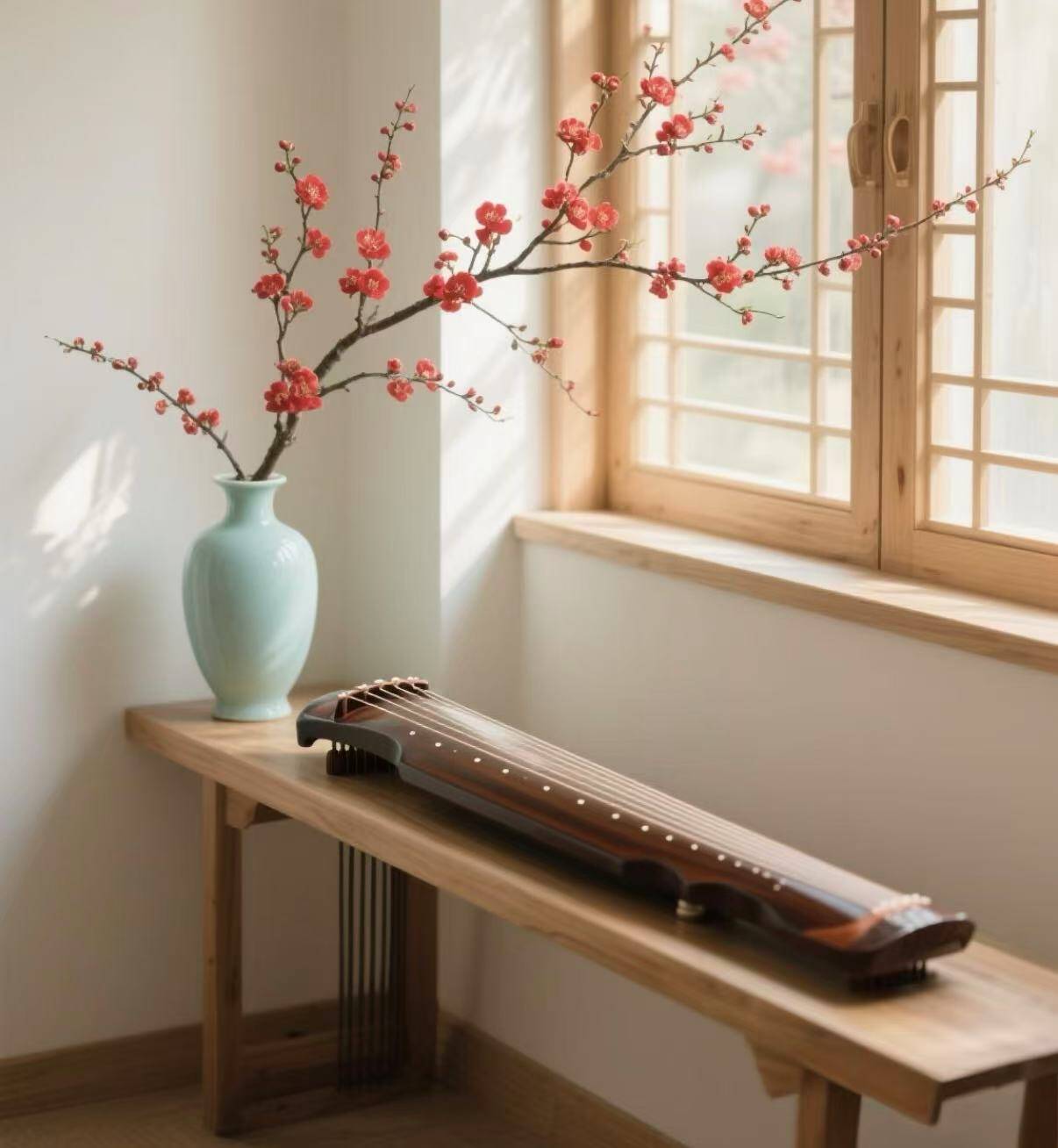
Discovering small pleasures in practice can make the repetitive process meaningful. For beginner players, in addition to mastering standard fingerings, it’s also crucial to pay close attention to the tone of the guqin itself. When playing open strings, feel the earthy and solid, ancient and mellow sensation. When practicing harmonics, capture the guqin's inherent ethereal and clear quality. You can try playing with your eyes closed, concentrating fully on the auditory experience, and relaxing your body and mind in the sound of the guqin. You can also create a sense of ritual for yourself, such as placing a potted plant by the window and burning a light incense, practicing in a comfortable environment, and making guqin practice the most pleasant part of your day.
Establishing positive feedback can keep interest growing. Beginners can set small goals for themselves, such as rewarding themselves with something they like after completing a piece each day. You can also record your playing and compare it after some time to clearly see your progress. This sense of achievement will become the motivation to keep going. Additionally, joining a community for guqin beginners, sharing practice experiences and playing results with like-minded people, can not only encourage each other but also gain inspiration from others' progress.
Learning to coexist with "unfavorable situations" is also an important part of maintaining interest. During practice, it's inevitable to encounter stiff fingers and disordered rhythms. At such times, there's no need to be anxious or self-blaming. You can temporarily set aside the difficult problem and play a piece you are most familiar with, or simply strum the strings at random, enjoying the relaxation brought by the sound of the guqin. You can also change your practice method, such as humming the melody along with the guqin audio and then trying to play it on the guqin, using auditory memory to assist in practice and making the process more interesting.
Learning the guqin is inherently a slow journey. Beginners don't need to rush for quick success. As long as you find a method that suits you, feel the beauty of the guqin's sound during practice, and gain a sense of achievement from progress, your interest in learning the guqin will remain strong. When the guqin becomes a natural companion in life, those seemingly monotonous practices will eventually turn into nourishing and delightful moments for both body and mind.