2nd Feb 2026
The Guzheng and the Harp: Musical Mirrors of Eastern and Western Civilizations
The guzheng and the harp are two plucked string instruments from the East and the West respectively. They originated in different places and have distinct cultural backgrounds, yet both produce sound through the vibration of strings, conveying people's pursuit of beauty, like a mirror reflecting the differences between Eastern and Western civilizations.
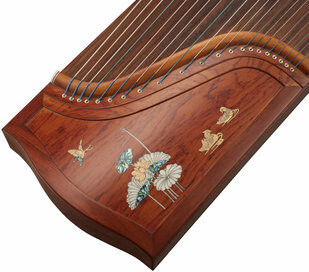
The guzheng originated in China and can be traced back to the Spring and Autumn and Warring States periods. It initially had only five strings, and after thousands of years of evolution, it has become the common 21-string version we see today. In ancient China, the guzheng was a favorite among scholars and literati, and was known as one of the "Four Arts of the Scholar" along with the qin, chess, and calligraphy, embodying the Eastern aesthetic concept of "harmony between man and nature". Ancient people often played the guzheng in bamboo groves, beside springs, or by the window under the moonlight. Classic pieces such as "High Mountains and Flowing Water" and "Fisherman's Song at Dusk" combine the scenery of mountains and water with people's emotions through techniques like tremolo and glissando, without directly depicting the subject matter but allowing the listener to experience it themselves. This is similar to the characteristics of traditional Chinese culture, like the ink wash painting that leaves some blank spaces, emphasizing inner feelings and spiritual pursuits.

The harp has an even earlier origin, dating back to ancient Egypt and Mesopotamia around 3000 BC. An interesting theory suggests that its inspiration might have come from the ancient hunting bow, as people discovered that plucking the taut bowstring produced a pleasant sound, which led to the creation of this stringed instrument. In European history, the harp was once an exclusive instrument for courts and nobility, symbolizing elegance and sanctity, and was often featured in religious ceremonies or royal celebrations. When playing the harp, techniques such as arpeggios and chords are mainly used, aiming for a clean tone and full harmony. This reflects the Western culture's emphasis on formal beauty and logical order, much like the precise proportions of ancient Greek sculptures that display beauty within rules.
Although the guzheng and the harp have different cultural roots, they share commonalities. Both use strings to express thoughts about nature, emotions, and life. The simplicity of the guzheng and the regularity of the harp, at their core, both represent the pursuit of beauty. Nowadays, the guzheng has gradually spread to foreign countries, and the harp has also entered the Chinese stage, becoming a carrier of cultural exchange between the East and the West.
The guzheng and the harp, one with the reserved nature of Eastern culture and the other with the regularity of Western culture, each represent different civilizations but are both precious artistic treasures of humanity. In different regions, they use the sounds of strings to express people's common yearning for beauty.