16th Jan 2026
The Hidden Logic of Guqin Sales: Finding the Right Fit Based on Personal Traits
When choosing a guqin, the tone and craftsmanship are undoubtedly important, but the overlooked personal hidden needs often determine the compatibility of the guqin with one's life. A truly suitable guqin should become an extension of the player's body and a companion in life. Factors such as the difference in hand shape, aesthetic preference, and playing style all have a significant impact on the selection of a guqin.
The difference in hand shape is the primary hidden need to consider when choosing a guqin. Everyone's palm size and finger spacing are different, and the suitability of the string distance of the guqin is also quite distinct. For those with small hands or wide finger spacing, if they choose a guqin with a wide string distance, they will need to overly extend their fingers when pressing the strings. This not only causes discomfort, but can also lead to joint damage due to long-term practice.
Besides the string distance, the tension of the strings and ergonomics are also crucial details. The tightness of the strings directly affects the finger strength required when pressing the strings. For middle-aged and elderly people with weaker strength and limited endurance, or for young beginners, strings with high tension will quickly deplete finger strength, creating a "fear of pressing strings" and hindering basic skill training. Such groups should prioritize trying softer, more responsive medium to low tension strings to cultivate a relaxed and natural playing habit. As finger strength increases, they can then transition to standard tension strings.

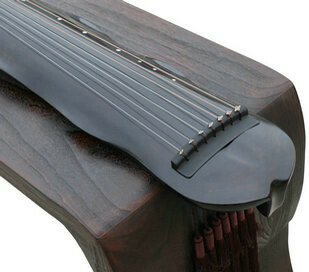
At the same time, the overall curvature and contour of the guqin body should not be ignored. The design of the guqin should be in harmony with the natural resting point of the arm and the palm's contact surface. A well-ergonomically designed guqin allows the player to be in a relaxed and efficient state.
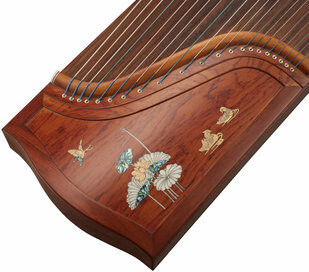
Different aesthetic preferences also have a significant impact on the choice of guqin. Those who prefer a minimalist style should choose a guqin without carvings or decorations, while those who favor a maximalist style can opt for a guqin with reliefs, inscriptions, or inlaid decorations.
Furthermore, everyone has a different playing style, and the choice of guqin should follow one's own feeling. If one prefers a quiet and traditional style, a guqin with a gentle tone and long reverberation should be chosen. Such a guqin does not need to be overly loud but should be pleasant to listen to, becoming more enjoyable with each play. However, if one frequently performs on stage or enjoys playing powerful pieces, a guqin with a clear and loud sound is needed. Additionally, the body of the guqin can be slightly lighter for easier portability. In summary, personal experience is essential.
Choosing a guqin is never a one-way process of "picking a good item", but rather a two-way process of mutual compatibility. Only by taking these details into account can the guqin truly become an extension of the player's body and allow techniques to improve in comfort.