8th Jan 2026
The History of the Guqin in the UK: From Oriental Elegance to Local Rooting
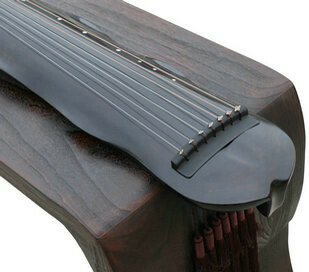
In the arts of "calligraphy, painting, chess, and qin", qin often refers to the guqin, which was an instrument used by ancient Chinese scholars for self-cultivation. Thus, it not only has a unique musical culture but also a mature aesthetic standard and playing school.
From the merchant ships of the Ming and Qing dynasties to the sounds of the Thames, this is a dialogue spanning three centuries. The spread of the guqin in the West was not an overnight fad but a cultural rooting and blooming.
The early encounter of the guqin with the UK was through indirect transmission via literature. In 1776, a Frenchman named Jean-Pierre Abel-Rémusat sent the first batch of guqins to Europe by sea. He was deeply in love with Chinese classical music and during his decades in China, he wrote a book titled Research on Ancient and Modern Chinese Music, which systematically introduced the shape and philosophical connotations of the guqin. Many Western readers learned about the guqin from this book.
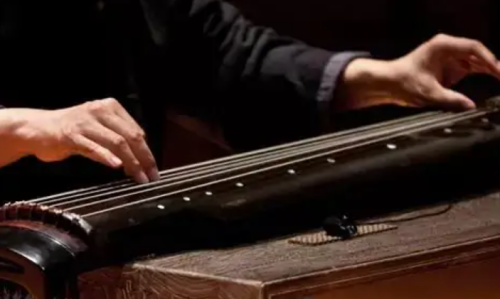
It was not until over a century later that the guqin re-entered the Western view, as an exotic item in the collections of the nobility. At this time, what people knew about the guqin was its elegant appearance rather than its profound cultural background. However, in 1938, the International Red Cross Relief Administration organized a group of Chinese cultural troupes to perform in the US to raise funds for refugee relief. The guqin accompanied Chinese musicians in over a hundred performances in cities such as Washington, New York, and San Francisco, and began to attract the attention of Western music audiences.
Two years later, the publication of The Way of the Guqin made the guqin well-known in the West. This is the most comprehensive book written in English about the guqin to date. The Way of the Guqin not only detailed the playing techniques of the guqin but also expounded on the Chinese traditional culture it carries. At the same time, the Western pursuit of Eastern philosophy provided a new direction for the guqin. It finally became more than just an instrument in this land but an art form for self-cultivation. Through the efforts of people like John Thompson, the guqin gave birth to new life in the UK.
Entering the 21st century, the spread of the guqin in the UK has become more widespread. Guqin societies and professional teachers started to enter the UK, universities have started to offer courses related to the guqin, and many Chinese orchestras have held guqin performances here. More and more young people have begun to understand and love the guqin, and integrate it with British local music for innovation. The guqin has become a part of British life.
Today, the seven-stringed sound is no longer just a piece of music but a bridge connecting China and the UK. True cultural integration is when it blossoms even more beautifully in new soil.