10th Feb 2026
The Instrumental Positioning and Cultural Authenticity of the Chinese Zither
When people mention the zither, they often think of the popular folk instrument in the West known as the ancient guitar. However, few are aware that in traditional Chinese music, the guzheng is often referred to as the Chinese zither. This nomenclature is not a random comparison but is based on precise definitions in terms of instrument classification, physical characteristics, and cultural positioning. Understanding this naming logic not only helps us grasp the instrumental attributes of the guzheng but also reveals the clear coordinates of traditional Chinese instruments within the global system.
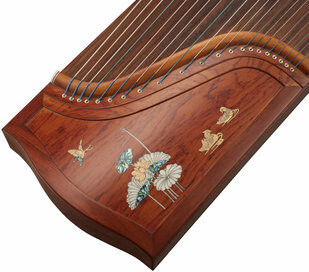
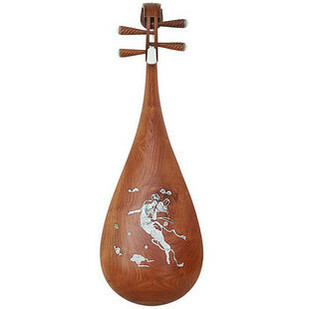
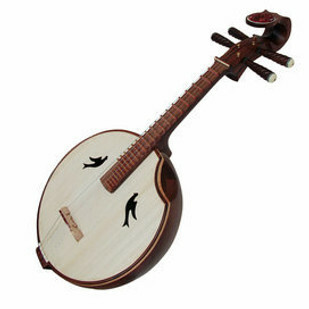
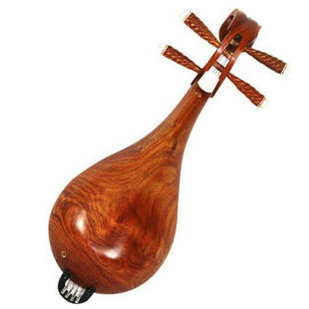
From a taxonomic perspective, the core definition of a zither is a stringed instrument without a neck, with strings directly laid across the soundboard. The guzheng perfectly fits this criterion, featuring a flat, elongated soundboard without a prominent neck, and strings that run horizontally across the face, supported by movable bridges. This is in stark contrast to instruments like the pipa and ruan, which have necks. This is the fundamental basis for classifying the guzheng as a zither.
The physical characteristics further confirm the rationality of this classification. The guzheng has a soundboard made of paulownia wood, the number of strings has gradually standardized to 21 over time, with each string equipped with a movable bridge for tuning and transposition. This structure, where strings are directly attached to the resonating body without a neck for sound transmission, is a typical feature of the zither family. Although the guzheng and Western zithers differ in the number of strings and playing techniques, they share the same core construction logic, which is the key reason why the international academic community classifies the guzheng as a zither.

In terms of cultural connotations, the guzheng, as the representative of the Chinese zither, carries distinct Chinese imprints. Unlike the Western zither, which is primarily used for folk entertainment, the guzheng has been part of court music since the pre-Qin period and later integrated into folk customs, becoming an instrument appreciated by both the refined and the common. It serves as a carrier of the ritual and music system and also accompanies the lives of the common people. Over thousands of years of inheritance, it has developed a unique character that combines the refined interests of scholars and the vitality of the folk, making the concept of the Chinese zither transcend the classification of musical instruments and become a symbol of cultural identity.
Compared to the Western zither, the Chinese zither has never been confined to the role of folk accompaniment but has developed into an instrument system with three cultural dimensions, the spirit of scholars, the vitality of the folk, and national characteristics. It is not a localized variant of a foreign instrument but an independent system rooted in Chinese soil.
Clarifying the relationship between the guzheng and the zither is not merely an academic naming issue but a process of restoring the true nature of traditional instruments. The guzheng, with its rigorous construction logic, is integrated into the global family of musical instruments, while its unique oriental charm sets it apart. This naming allows the world to hear the voice of Chinese stringed instruments and gives the thousand-year-old guzheng an accurate and resounding identity in the international music landscape.