28th Jan 2026
The Persistence of the Guqin Shop in the Tide of the Times
Pushing open the wooden door, the scent of pine resin and paulownia wood greets you like an old friend. This is not merely a place to display musical instruments, but a living carrier of traditional culture. Every detail tells the story of the transmission code of guqin culture, making the ancient oriental aesthetics still palpable, touchable and discoverable in the contemporary world.
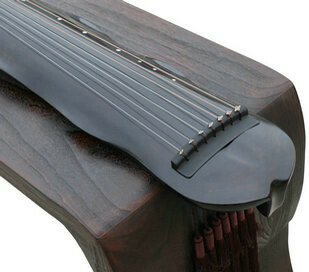
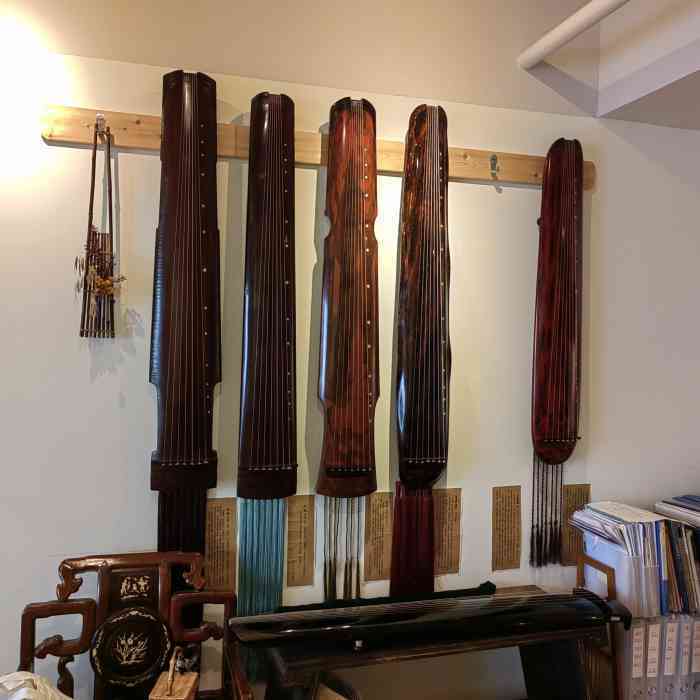
The cultural heritage of the guqin shop is hidden in the texture of each guqin. The guqins displayed in the shop are either simple and ancient in the style of Confucius or round and heavy in the style of Fuxi, all crafted according to ancient techniques. These procedures following the ancient teachings of "Kao Gong Ji" make each guqin a cultural token transcending time and space. When your fingers glide over the surface of the guqin, it seems as if you can touch the aesthetic pursuits of scholars a thousand years ago. The inscriptions hanging on the wall are not only explanations of the guqin's sound but also concrete expressions of the "harmony between man and nature" concept in oriental aesthetics.
The cultural inheritance of the guqin shop is evident in the continuation of guqin scores and techniques. Neatly arranged on the table are ancient scores such as "Feng Xuan Xuan Pin" and "Shen Qi Mi Pu", which record the rhythms of thousand-year-old guqin pieces through the unique jianzi notation. This non-musical notation system itself is a crystallization of traditional culture. The teaching in the guqin shop does not merely focus on finger techniques but also emphasizes cultural roots. "Three Variations on Plum Blossom" tells the story of Wang Xizhi's "visiting Dai in the snow at night", and "High Mountain and Flowing Water" narrates the story of Yu Boya and Zhong Ziqi's friendship. Here, students not only learn techniques like "hook, pick, stroke, and pluck" but also understand ancient teachings through the artistic conception of the pieces, transforming the guqin from a mere instrument into a carrier for self-cultivation. The shop owners are often inheritors of the art, having learned from masters, thus reviving ancient guqin pieces on the verge of being lost.
The cultural vitality of the guqin shop is seen in the lively atmosphere of gatherings and exchanges. On every seasonal festival or auspicious day, the shop holds gatherings where guqin enthusiasts bring their own guqins, sit around a tea table, brew tea and discuss the guqin, playing and singing. This thousand-year-old tradition of gatherings brings guqin culture out of its lofty ivory tower and becomes a bridge for communication between scholars and ordinary enthusiasts. The shop often invites guqin-making masters and cultural scholars to give lectures, covering the evolution of guqin-making techniques and the historical context of guqin culture, allowing more people to deeply understand the profound heritage of this art and ensuring the continuous transmission of oriental aesthetics through exchanges.
The guqin shop is like a miniature museum of oriental aesthetics, using the guqin as a medium and culture as its soul, preserving guqin-making techniques, the rhythms of guqin pieces, and the refined interests of scholars. In the midst of changing times, it holds fast to the roots of traditional culture, allowing everyone who enters to feel the charm of oriental aesthetics. Here, the thousand-year-old guqin melodies have not faded but have become richer through generations of transmission, becoming a cultural spring nourishing the spiritual world of contemporary people.