11th Feb 2026
The Resonant Strings Crossing Mountains and Seas: The Guzheng on Toronto's Cultural Stage
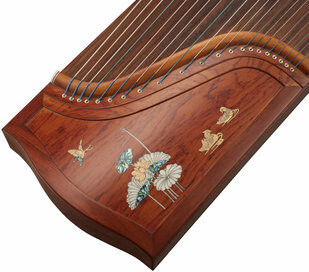
In Toronto, the guzheng, a traditional Chinese instrument, is gradually moving from the Chinese community to a broader public audience. It is no longer confined to Chinese New Year celebrations but is also featured in multicultural festivals and professional concert halls, serving as an important medium for spreading Chinese culture.
During the Lunar New Year, the Chinese community, municipal squares, and large shopping malls in Toronto host various celebration events, where guzheng performances have become a regular feature. Performers typically choose lively and festive pieces such as "Xiyangyang" and "Spring Festival Overture" to enhance the festive atmosphere. For overseas Chinese, these familiar melodies evoke memories of home, while for local residents, it offers a direct experience of Chinese culture.
Toronto is a culturally diverse city, and its annual multicultural festivals attract participants from all over the world. At these events, the guzheng, with its unique timbre and expressive power, often represents East Asian culture on stage. Performers dressed in traditional Chinese attire play classic pieces like "High Mountains and Flowing Water" and "Evening Song of Fishermen", drawing many spectators to stop and listen. Both the elderly and children can sense a different form of expression from Western music in the sound of the guzheng. Such brief encounters help break down cultural barriers and enhance understanding.
Beyond festivals and community events, the guzheng is also making its way into more professional art spaces. In recent years, Toronto has witnessed the emergence of concerts dedicated to traditional Chinese music, some of which have experimented with combining the guzheng with the piano, violin, and even jazz. These cross-cultural collaborations not only expand the guzheng's performance forms but also make it easier for local audiences to accept and appreciate traditional Chinese music. Some local music schools have also started offering guzheng courses, attracting non-Chinese students, indicating that this art form is being more widely embraced.
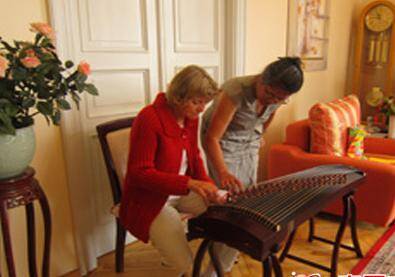
The development of the guzheng in Toronto is attributed to a group of dedicated teachers, performers, and cultural organizations that have long been promoting it. They not only teach the instrument but also introduce its history and cultural background to the public through performances, lectures, and workshops. This continuous effort has transformed the guzheng from being merely an "instrument of the Chinese community" to a part of the city's cultural ecosystem.
Overall, the guzheng is becoming increasingly visible in Toronto, appearing in a variety of settings. It not only carries the cultural identity of overseas Chinese but also serves as a window for the local society to understand China. From the streets to the stages, from communities to schools, the guzheng is telling China's story in a simple yet persistent way in a foreign land. This kind of cultural dissemination may not be spectacular, but it is solid and effective, allowing traditional music to find new soil overseas.